
 July 1, 2013
My first interaction with an Icelander:
Me: Góðan daginn!
Immigration inspector: [unintelligable stream of Icelandic]
Me: Uh, you just heard all the Icelandic I know.
Immigration inspector: [big grin] Yes, I knew that. [stamps passport] Have a good visit.
A nice start to the trip.
We were met at the airport by Torsten, a taxi driver sent by Iceland Unlimited for the 40 minute drive to Reykjavík. He told us a bit about the country, particularly the fact that all of their power is renewably generated, a mixture of geothermal and hydroelectric. We passed an aluminum smelting plant on the way; they ship bauxite from South Africa to refine because aluminum refining requires huge amounts of electricity, which is relatively inexpensive in Iceland. Other companies are building data centers here for the same reason. But for some reason, they don’t seem to be early adopters of electric cars.
We checked into our hotel, which had a two-bedroom apartment for us about a block away from the hotel itself. What a beautiful apartment it is! It features a full kitchen and dining area that we are under-utilizing, and a large living room. It also has a perfect view up Skólavörðustígur to the front of Reykjavík’s landmark church, Hallgrímskirkja.
After dropping our stuff, we set out on foot in a bit of a shower to explore the downtown. After finding an ATM, we stopped at the Café Paris for lunch; I had an excellent Icelandic stew featuring delicious chunks of lamb.
We then went to the Iceland Unlimited office for our scheduled orientation briefing. One of the travel advisors went over the itinerary and pointed out other things we can visit if we have the interest (and time) along the way. I’m glad she wrote lots of notes on our map, because the jet lag was catching up with me.

Hallgrímskirkja
The rain having stopped, we continued our walk in the direction of the harbor, down a street that looked to be part of Iceland’s Embassy Row, then to Hallgrímskirkja. When we entered, an organist was practicing, and we were treated to a short organ recital. The combination of the modern pipe organ and the large interior of the church was acoustically very impressive. The architecture was similarly notable, drawing from the Gothic cathedral style but with a Protestant simplicity to the decor.
Following the organ practice, we took the elevator to the observation area in the steeple and got panoramic views of Reykjavík. When the clock chimed at close range, it startled us quite a bit!
On the way back to our room, we stopped for a snack at one of the many cafés in the area. We set out for dinner with a particular pizza place in mind, but one of the locals on the street discouraged us, saying that it is overpriced for what you get. So we wandered a bit and settled on a somewhat touristy restaurant that was at least reasonable. Then we finally let ourselves get some much-needed sleep.
This article is part of a series about our recent vacation in Iceland. To see the introductory article in the series, click here.

June 30, 2013
It’s hard to pack for cold weather when it’s really hot outside. But with temperatures in the 90s, that’s what we had to do when packing for our trip this year to Iceland, where it will be in the 40s and 50s.
As I have done in previous years, I will be blogging each day’s activities two weeks after they actually happen. This gives me time to edit, find pictures, and not alert the world’s burglars that we’re away from home (an overblown concern, but a good excuse anyway). The recurring characters in our story are myself (Jim), my wife Kenna, and our 13 year-old daughter Celeste.
Why Iceland? After two years of domestic vacations, we wanted to do an international trip again. We recalled the great experience we had two years ago in Alaska with a self-drive tour: the tour company makes lodging and activity reservations and rents a car for you to drive. Islands have the advantage of limiting how much driving we sign ourselves up for, and we briefly considered New Zealand, another place I really want to visit. But days are short in New Zealand this time of year, so we decided on Iceland, another of my fantasy destinations. Iceland has a reputation for being really expensive, but their economic problems of a couple of years ago have made Iceland merely expensive, and that weighed in their favor as well.
Online research led us to Iceland Unlimited, which booked a 13-day tour featuring a drive on the Ring Road around the perimeter of the island. We have quite a number of activities as well, and were advised to pack warm clothes, even long underwear and waterproof pants, for some of them. But it’s hard to find these things in California in the summer.
The most common way to get to Iceland is to take Icelandair from Seattle, Denver, Minneapolis, or Boston. I like to travel straight from the West Coast to Europe in order to have the best opportunity to sleep. But Hipmunk helped me find the best deal, which turned out to be on Delta, connecting through New York, and my frugal tendencies won out.
The flights were happily uneventful. We landed and departed from a new section of Terminal 4 at JFK airport, which was really quite nice. Our outgoing flight was delayed about 45 minutes, but we made up all of it and more due to strong tailwinds, and landed a bit early at Keflavík International Airport, about 40 miles from downtown Reykjavík.
Watch for daily installments of our trip experiences for the next 13 days.
Each of the past three years, I have written a blog post in January describing my experiences upgrading my home Linux machine from Fedora n to Fedora n+2. I had started with Fedora Core 4 and upgraded religiously once a year to make sure that I received maintenance patches, especially security fixes. The past few years, I ran into various issues that I attempted to document to compensate for some of the help that I have been receiving from receiving others’ blogs.
I expected to do the same this year. But Fedora 18 came out rather late, well after the Holiday break that was usually my opportunity to do the upgrade. My upgrade on top of upgrade strategy was beginning to show cracks: some things like my /boot partition being too small were causing problems. Perhaps it was time for a fresh install. So I went to my local computer store for a new 500 GB disk drive, which set me back surprisingly little.
But since I was doing a new install, I was no longer tied to Fedora. The early reviews on Fedora 18 were less than stellar, and the virtual private servers I use to supplement my home system generally run Debian. So I checked with a friends, and Ubuntu (which is derived from Debian) seemed to be the leading recommendation, so I went with it.
First a bit of a rant: Why do the various flavors of Linux seem to call things by different names (and not consistently, either), seemingly only for the sake of different names? Is the name server daemon named, bind, or bind9? Is the web server httpd, apache, or apache2? One of the biggest adjustments has been the naming changes and the different locations of configuration files and such.
Despite Ubuntu’s somewhat different look and feel from Fedora, things went fairly smoothly following the conversion with a few exceptions:
- Under Fedora, I had run bind9 (or whatever the proper name is) in a “chroot jail”: it was able to address only a small portion of the file system, that it owned. I tried doing the same under Ubuntu, and nothing worked. It turned out that Ubuntu was running something called AppArmor, which restricted the bind’s access to the file system without using the chroot option. In fact, the two mechanisms worked against each other; I ended up turning off Bind’s chroot option, and adjusting the AppArmor configuration to give it the permissions to access zone and configuration files and libraries.
- UIDs changed on the new system; they seem to be starting at 1000 rather than 500 now. Rather than mess with trying to change the start point back to 500, I brought files and directories over from the old filesystem and changed their ownership as needed, usually using the find command.
Due to the variety of things I run on my system, I have had to tweak a few other options, but nothing very drastic. It has been running for 2 or 3 months now, and there have been few problems. Ubuntu is now telling me that there’s a release 13.04 available; I need to get up to speed on how often these releases happen (looks like every 6 months) and how long they’re supported (looks like a year, except for “long term support” versions) so I can get on the upgrade bandwagon like the one I did with Fedora.
This article is part of a series about our recent vacation traveling down the Mississippi River. To see the introductory article in the series, click here.
We had a late flight home, so we tossed around ideas for things to do in New Orleans for the early part of the day. By popular demand (all of us), we made a return visit to Café du Monde for another breakfast of beignets. I loved the café au lait the other day, so I ordered a large one this time. Unfortunately this means that it comes in a Styrofoam cup rather than a modest china cup, and it isn’t nearly as satisfying that way. I recommend the small.
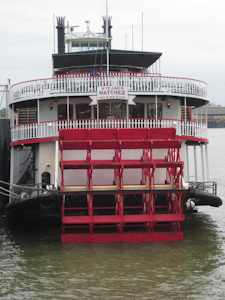
Mississippi tourboat
It started to rain again at the airport just as we arrived, and after reaching our gate there was yet another torrential rain and thunderstorm. The airport reported about 2.3 inches of rain that hour. Our flight was delayed a bit by the fact that the ground crew can’t work outside when there is lightning, but fortunately Frontier held our connecting flight in Denver long enough for us, and our luggage, to just make it.
The weather in the Bay Area felt especially cool and dry on our return.
Mississippi River crossings today: 0
July 20, 2012
This article is part of a series about our recent vacation traveling down the Mississippi River. To see the introductory article in the series, click here.
Since we still have the rental car, we thought it might be fun to travel outside New Orleans a bit. Specifically, we wanted to see some of the delta swamps (and perhaps an alligator). We were also interested in seeing a bit of the Gulf coast, by heading east into Mississippi once more.

Barataria Preserve
It started raining again, so we got back in the car to go to our second destination. Just east of Lake Pontchartrain, the weather got very dark and rainy again, prompting us to turn around because we wouldn’t see anything anyway.
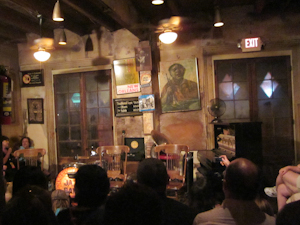
Preservation Hall
Mississippi River crossings today: 2
July 19, 2012
This article is part of a series about our recent vacation traveling down the Mississippi River. To see the introductory article in the series, click here.

Beignets and café au lait
Along the way, we noticed large numbers of youth in various matching tee shirts all around the city. It turns out that the Evangelical Lutheran Church of America is having its triennial youth summit, bringing about 33,000 clean-cut and polite kids and their leaders to New Orleans. Nevertheless, we had to watch out for these groups because their sheer numbers meant that they tended to clog sidewalks and restaurants.
My work was falling behind, so I took much of the day off from sightseeing and let Kenna and Celeste do some touring without me. I rejoined them at Central Grocery for lunch, where we shared a muffuletta, an enormous and delicious sandwich (one served all of us more than adequately).
They walked around the French Quarter, did some shopping, and visited one of the National Park Visitors Centers where they heard about some concerts taking place in the Old Mint. The building has been refurbished by the National Park Service and the State of Louisiana and now houses a small theater and museum. They sat in on a concert and lecture about the history of New Orleans jazz, hosted by an excellent jazz piano player.
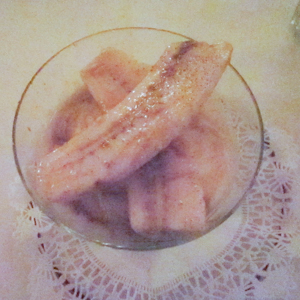
Bananas Foster
As we ate our dinner, it started to rain, and then more, and when it was time to leave we were getting torrential rain, a full-blown thunderstorm. While hailing a cab from under the awning, we had a lightning strike very nearby, which was memorable. We quickly found an available cab, and returned to the hotel without further incident. From our room on the 15th floor, we had front row seats for the rest of the thunderstorm. We could also see many of the Lutherans returning on foot from a gathering they had at the Superdome, undoubtedly and unfortunately drenched.
Mississippi River crossings today: 0
July 18, 2012
This article is part of a series about our recent vacation traveling down the Mississippi River. To see the introductory article in the series, click here.

Mount Locust Inn, along Natchez Trace Parkway
We stopped for lunch in Natchez at the Pig Out Inn, a funky barbecue restaurant, then drove southward into Louisiana. As we drove into Baton Rouge, we took one of the most ironically-named streets I have ever seen. Scenic Highway runs alongside several oil refineries and storage facilities.

Louisiana Capitol
Mississippi River crossings today: 2
July 17, 2012
This article is part of a series about our recent vacation traveling down the Mississippi River. To see the introductory article in the series, click here.
Today was a longer drive again. We crossed into Mississippi a couple of miles after crossing the river, owing to changes in the course of the river since the state boundaries were established. Our first stop was at a visitor center where the host’s main focus seemed to be on making sure we signed in so that their visitor counts were good. After that, we were pretty much on our own. One thing we did learn there was that a few miles down the road was Leland, Mississippi, Muppets creator Jim Henson’s boyhood home and the “birthplace” of Kermit the Frog.
We had a pleasant picnic lunch on the shore of Deer Creek (no frogs seen, though) and spent a few minutes inside the very pleasant Jim Henson Museum. Then it was off to Vicksburg.
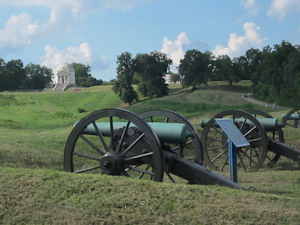
Union Line at Vicksburg
After checking in at our hotel, we had dinner at Walnut Hills, a local restaurant situated in an elegant historic house. We had excellent Southern food in perfect surroundings, followed by a few minutes in the rocking chairs on the front porch.
Mississippi River crossings today: 1
July 16, 2012
This article is part of a series about our recent vacation traveling down the Mississippi River. To see the introductory article in the series, click here.
Today’s drive is one of the shorter legs: only about two hours. We plan on spending only one night in Little Rock, so we got a good start in order to see as much as possible this afternoon.
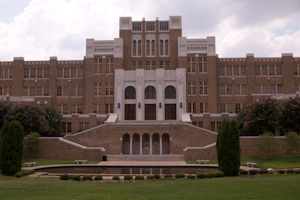
Little Rock Central High School
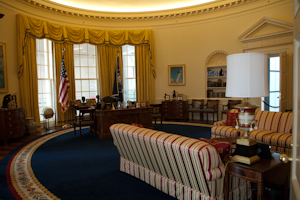
Oval Office replica
Mississippi River crossings today: 1
July 15, 2012
This article is part of a series about our recent vacation traveling down the Mississippi River. To see the introductory article in the series, click here.
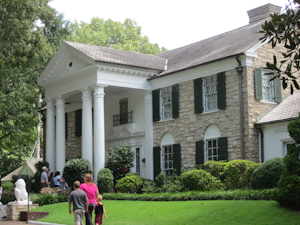
Graceland
We returned to downtown Memphis for lunch and then visited the Cotton Exchange museum, which highlights the role of cotton on the local economy and beyond. Many of the exhibits were located on the actual trading floor that had been used in years past.
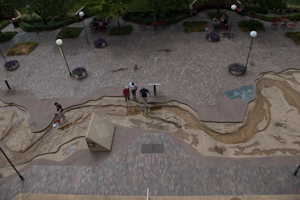
Mud Island river model
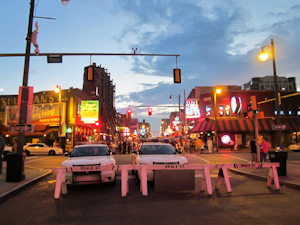
Beale Street Party
We finished the evening with a ride on one of Memphis’s historic trolleys. It was enjoyable, but we couldn’t see much because it was dark by then. Still it was quite a bargain for $1 each.
Mississippi River crossings today: 0 (except the channel to Mud Island)
July 14, 2012
 Altmode