
Kimberley Trip, Day 12: Vansittart Bay and Jar Island
Monday, June 3, 2024
The Orion was repositioned overnight at our next destination on the Kimberley coast. Fortunately, the seas were relatively calm (as compared with the trip to and from Darwin), and we didn’t need to work as hard to walk around.
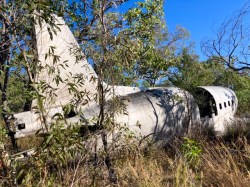
Our morning destination was the site of a World War II plane wreck, a C-53 that had gotten lost on a trip from Perth to Broome. They neglected to bring along a navigator. The plane ran out of fuel, tried to land on a mud flat, and skidded into the forest, losing one of its wings and an engine. Fortunately, they were rescued after several days, and everyone survived. The metal frame and skin of the plane are relatively intact, and we had an opportunity to walk around a bit and examine them.
While in the area, we walked through the woods and saw several things described in our preparatory lectures: a boab tree, a paperbark tree (essential to the Aboriginals for many uses), and a potentially quite old termite hill.
We walked back to the beach across the mud flat, examining large sandstone formations along the way.
The afternoon destination was Jar Island, a nearby island featuring ancient Gwion Gwion indigenous rock art. We were given three options for our short hike: “easy,” “moderate,” and “difficult,” with the more challenging routes giving us more to see. We chose the difficult route, which, other than requiring a little use of hands to ascend and descend some rocks, was not that challenging. The rock art was of uncertain (but very old) age and was painted on the sandstone at the three sites we visited.


Returning to the beach just as the sun was beginning to set, we were surprised by an impromptu beach party (cocktails and music) that the staff had set up. The party was a lot of fun, and we returned to the Orion just as it was getting dark.
Upon our return, our festive mood was quickly dispelled by an announcement from the ship’s doctor that three cases of COVID had been found on board the ship. Masks were distributed (but were voluntary), and arrangements were made to isolate the affected people in their cabins for a minimum of 24 hours and to bring their meals to them. I had noticed someone wearing a mask picking up breakfast early that morning and was suspicious that there was an outbreak on the ship. It soon became evident who the affected people were, as dinner menus appeared in the document holders on their cabin doors. Two of the cabins across the hall from ours were included.
This article is part of a series about our recent trip to Indonesia and Australia. To see the introductory article in the series, click here.
 Altmode
Leave a comment